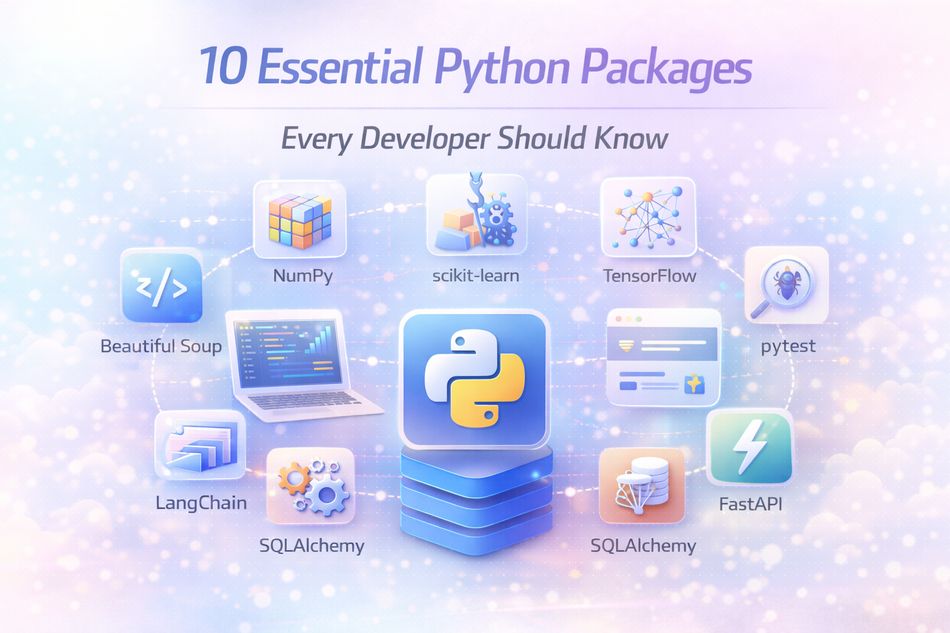

Python’s package ecosystem is one of the main reasons the language remains so productive. But using packages well involves more than running pip install. Developers need to understand package choice, dependency management, project structure, packaging standards, and distribution practices.
What makes a package essential
An essential package is not necessarily the newest or most glamorous one. It is a package that repeatedly solves common problems well. The most useful packages often save time across automation, web development, data handling, testing, HTTP work, configuration, and developer tooling.
Common categories every developer should know
- HTTP clients
- Data handling libraries
- Testing tools
- CLI helpers
- Environment and configuration tools
- Packaging and build tools
- Web frameworks
- Data validation libraries
- Task automation helpers
- Observability and logging tools
A better mindset than chasing lists
Instead of memorizing package lists, learn how to evaluate packages: maintenance quality, documentation, community adoption, release health, and compatibility with your project. That decision skill matters more than any fixed top ten.
Key Takeaways
- Start with the real user task, not the technology trend.
- Use structured workflows, examples, and evaluation criteria.
- Treat AI output as draft assistance unless verified.
- Choose tools and frameworks based on fit, not hype.
- Build habits of review, iteration, and grounded testing.
Further Reading
The most practical way to learn this topic is to move from theory into a small real project. Read the official documentation, test the ideas on a narrow use case, and review the results critically. That process will teach far more than passive consumption alone.