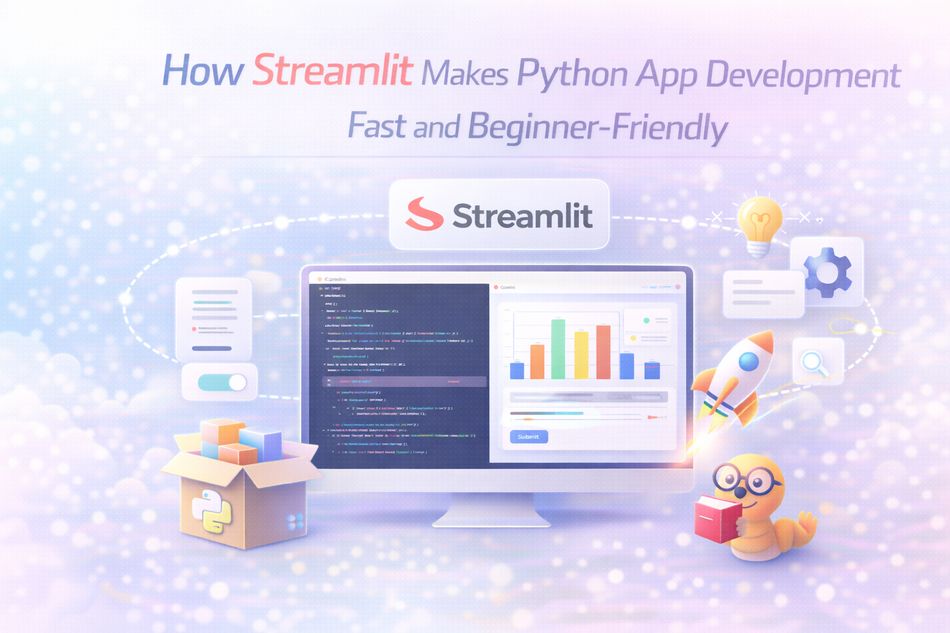

Streamlit is an open-source Python framework for building and sharing data applications. Its appeal is simple: developers can create interactive data or AI apps in Python with relatively little boilerplate, often making it one of the fastest paths from notebook idea to usable interface.
Why it feels easy
Streamlit builds on a scripting model that feels natural to Python users. You write code top to bottom, add widgets, display charts or tables, and rerun the app as inputs change. That lowers the mental overhead for people coming from notebooks or data scripts.
What beginners can build quickly
- Data explorers
- Model demos
- Upload-and-analyze tools
- Small dashboards
- Internal reporting utilities
The educational value
Because the barrier is low, beginners can focus on data logic, model behavior, and user value before learning heavier frontend stacks. This makes Streamlit excellent for experimentation and communication.
Key Takeaways
- Start with the real user task, not the technology trend.
- Use structured workflows, examples, and evaluation criteria.
- Treat AI output as draft assistance unless verified.
- Choose tools and frameworks based on fit, not hype.
- Build habits of review, iteration, and grounded testing.
Further Reading
The most practical way to learn this topic is to move from theory into a small real project. Read the official documentation, test the ideas on a narrow use case, and review the results critically. That process will teach far more than passive consumption alone.