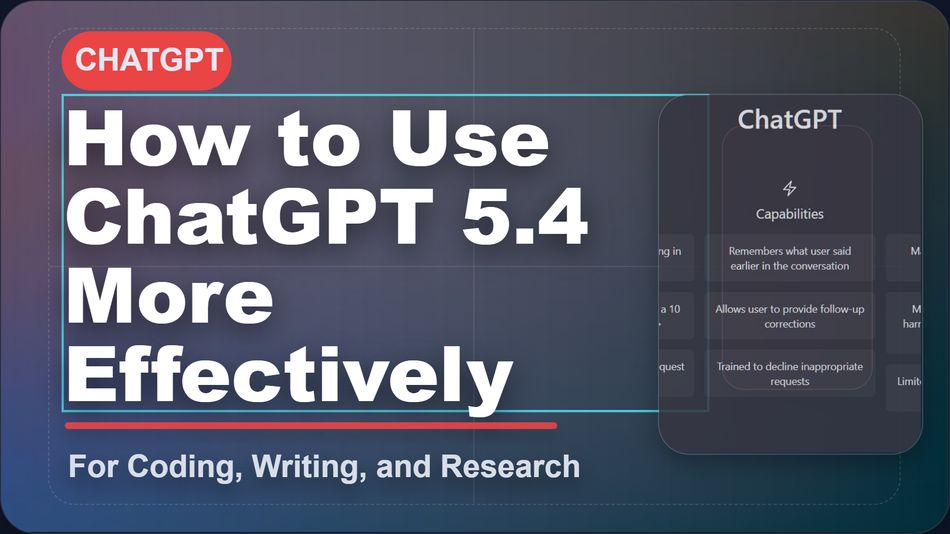

ChatGPT 5.4 Thinking is presented by OpenAI as a reasoning model designed for difficult, real-world work. OpenAI describes it as stronger than earlier thinking models across tasks such as spreadsheets, polished frontend code, hard math, document understanding, instruction following, image understanding, tool use, and research workflows that require combining information from multiple web sources.
Using the model strategically
Better results come from treating ChatGPT 5.4 as a collaborator for defined tasks, not as a magic box. For coding, provide the stack, the expected behavior, and the constraints. For writing, explain the audience, length, and tone. For research, define the question, the scope, and what counts as a trustworthy source.
Users often get weak output because the request is underspecified. Clear direction sharply improves relevance.
For coding
- Share the exact error and relevant code snippet
- State the framework and language version
- Request explanation before requesting a rewrite when learning matters
- Ask for edge cases and test ideas
For writing and research
- Ask for an outline before the full article
- Provide reference material when accuracy matters
- Request audience-specific versions of the same content
- Use iterative refinement rather than huge one-shot requests
A practical habit
One of the most effective habits is to ask the model to critique its own first output against your goal. For example, ask it to identify missing assumptions, unsupported claims, or sections that need simplification. This turns the interaction from simple generation into guided improvement.
Key Takeaways
- Start with the real user task, not the technology trend.
- Use structured workflows, examples, and evaluation criteria.
- Treat AI output as draft assistance unless verified.
- Choose tools and frameworks based on fit, not hype.
- Build habits of review, iteration, and grounded testing.
Further Reading
The most practical way to learn this topic is to move from theory into a small real project. Read the official documentation, test the ideas on a narrow use case, and review the results critically. That process will teach far more than passive consumption alone.